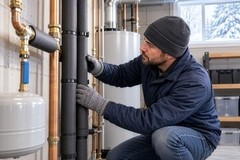
When temperatures in the Chicago area drop into the single digits, your basement becomes one of the most vulnerable spots in your entire home. Exposed water lines running along cold foundation walls or through unheated spaces can freeze quickly, and a frozen pipe can turn into a burst pipe that floods your lower level in a matter of hours. One of the smartest and most affordable ways to protect your home is to insulate pipes in basement areas before the cold weather settles in. As a trusted plumbing company in Chicago, we see the aftermath of frozen pipes every winter, and most of those emergencies could have been prevented with a little preparation.
The good news is that pipe insulation is a project many homeowners can handle themselves, and the materials are inexpensive compared to the cost of water damage. Below we will walk through why basements freeze, which pipes need the most attention, and the practical steps you can take to keep your plumbing flowing all winter long.
Why Basement Pipes Freeze in the First Place
Basements are naturally cooler than the rest of the house because they sit partly or entirely below ground and often lack consistent heating. Water lines that run along exterior foundation walls, near rim joists, or through crawl spaces are especially exposed to cold air seeping in from outside. When the water inside a pipe freezes, it expands, and that expansion creates enormous pressure. Even a small amount of ice can crack copper or split a fitting, and when the ice thaws, water escapes through the damage.
Older homes throughout the region are particularly prone to this problem because insulation standards were different decades ago. Drafty foundation vents, gaps around pipe penetrations, and uninsulated basements all contribute to the risk. Understanding where cold air enters is the first step toward keeping your pipes safe, and it helps you decide where to focus your insulation efforts.
Which Pipes Need Insulation Most
Not every pipe in your basement carries the same level of risk, so it helps to prioritize. Cold water supply lines along exterior walls are the most likely to freeze, but hot water lines can freeze too when they sit idle overnight. Pay close attention to pipes located near windows, vents, or any opening where outdoor air can reach them. Lines running through unheated crawl spaces or close to the foundation deserve the most protection.
When you plan to insulate pipes in basement spaces, start with the sections furthest from your heat source and work inward. Any pipe you can feel cold air blowing across is a candidate. If you are unsure which lines carry the greatest risk, our team can perform an inspection and point out the trouble spots before winter arrives.
Choosing the Right Insulation Materials
The most common and user friendly option is foam pipe sleeve insulation. These pre-slit tubes slip right over the pipe and come in sizes to match standard half inch and three quarter inch lines. They are inexpensive, easy to cut with a utility knife, and provide solid protection for most basement situations. For tighter corners and fittings, foam insulation tape or fiberglass wrap can fill in the gaps that sleeves cannot reach.
In areas that get extremely cold or where pipes have frozen before, electric heat tape or heat cable offers an extra layer of defense. These products warm the pipe directly and may be controlled by a thermostat so they only run when needed. Just be sure to follow the manufacturer instructions carefully, since improper installation can create a fire hazard. When you combine foam sleeves with compatible heat cable on the most exposed runs, following the manufacturer's installation requirements, you create a reliable barrier against freezing temperatures.
How to Insulate Pipes Step by Step
Once you have your materials, the actual installation is straightforward. Working methodically ensures you do not leave any vulnerable sections exposed, which is often where trouble begins.
- Clean and dry the pipes so the insulation adheres properly and no moisture gets trapped underneath.
- Measure each run and cut the foam sleeves to length, then fit them snugly over the pipe along the pre-slit seam.
- Seal the seams and joints with insulation tape, paying special attention to elbows, valves, and tees where cold air sneaks in.
- Add heat cable to the highest-risk lines if needed, installing it according to the product directions and covering it with foam only if the manufacturer permits.
- Seal any gaps in the foundation, rim joists, or around pipe penetrations with caulk or spray foam to block drafts.
Taking the time to insulate pipes in basement areas completely, including those awkward joints and fittings, makes all the difference. A single bare stretch of pipe can still freeze even when everything around it is protected, so do not cut corners on the small sections.
Extra Steps to Keep Pipes From Freezing
Insulation is your foundation, but a few habits add meaningful protection during deep cold snaps. Keeping your basement at least slightly heated, even to a modest temperature, dramatically lowers the freeze risk. Sealing air leaks around windows and foundation vents stops the frigid drafts that cause most problems. On the coldest nights, letting a faucet drip slightly keeps water moving, which can help prevent exposed pipes from freezing.
It is also worth knowing where your main water shutoff is located. If a pipe does freeze despite your efforts, being able to shut off the supply quickly can prevent a small leak from becoming major water damage. Pair that knowledge with the phone number of a plumber you trust, and you will be ready to respond fast. If you ever face a sudden flood or crack, our frozen pipe repair services in Chicago, IL are available to help you get things back under control.
When to Call a Professional
Some basements present challenges that go beyond a weekend project, such as hard to reach crawl spaces, extensive uninsulated runs, or pipes that have frozen repeatedly in past winters. In those cases, having experienced plumbers in Chicago evaluate your setup can save you from recurring headaches. A professional can identify hidden vulnerabilities, recommend the right combination of insulation and heat cable, and make sure everything is installed safely.
If you live in the western suburbs and need help, we also provide fast frozen pipe repair in Brookfield, IL and respond promptly when the cold causes problems. Serving Chicago and the surrounding areas, our team understands exactly how harsh local winters can be on home plumbing systems.
Protecting your home starts with a little planning before the temperature plunges. By identifying your most exposed lines, choosing quality insulation, and sealing the drafts that let cold air in, you give yourself the best chance of making it through winter without a frozen or burst pipe. Taking the time to insulate pipes in basement spaces is one of the most cost effective improvements any homeowner can make this season.
If you would rather leave the work to experienced hands, or if you want a professional opinion on your basement setup, reach out to Trojan Plumbing. We are happy to inspect your pipes, recommend the right solutions, and help keep your home safe and dry all winter long. Contact us today to get started before the next cold snap arrives.