Few household annoyances are as persistent as a shower that trickles instead of rushes, or a faucet that takes forever to fill a pot. When you notice low water pressure in house fixtures across multiple rooms, it usually points to something more than a single clogged aerator. As a trusted plumbing company in the Chicago area, we get calls about weak water flow all year long, and the causes range from simple maintenance oversights to hidden issues buried inside your walls or underground.
The good news is that most pressure problems are fixable once you understand what is behind them. Below, we walk through the most common reasons your home is not delivering the flow you expect, along with practical steps you can take before picking up the phone.
What Normal Water Pressure Should Feel Like
Residential water pressure typically falls somewhere between 40 and 60 psi. When it dips well below that range, you start to feel it in everyday tasks: sputtering showerheads, dishwashers that run long cycles, and washing machines that struggle to fill. Sometimes the drop is gradual and easy to overlook until guests mention how weak the water feels.
Before assuming the worst, it helps to figure out whether the problem affects the whole house or just one fixture. If only the kitchen sink is weak, the culprit is likely local. If every tap in the home is underwhelming, the issue lives somewhere upstream in your supply line, pressure regulator, or municipal connection.
Common Causes of Low Water Pressure in House Fixtures
One of the most frequent reasons for low water pressure in house plumbing is mineral buildup. Chicago area water carries dissolved minerals that gradually coat the inside of pipes, faucet aerators, and showerheads. Over the years this scale narrows the path water can travel through, and the flow at your fixtures slowly shrinks. Cleaning or replacing aerators and showerheads is often a quick win, but when buildup lines the pipes themselves, the fix is more involved.
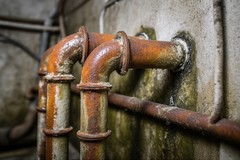
A failing pressure regulator is another common offender. This bell-shaped valve near your main shutoff controls how much force enters your home. When it wears out, pressure can swing too high or drop too low. Corroded galvanized pipes, common in older homes throughout Chicago and neighboring towns, also restrict flow as rust accumulates on the interior walls. And of course, a partially closed main shutoff or meter valve can quietly throttle your entire system without anyone realizing it.
- Clogged aerators or showerheads restricting a single fixture
- A worn or misadjusted pressure regulator affecting the whole home
- Corroded or aging galvanized supply pipes narrowing over time
- Partially closed main or meter valves limiting incoming flow
- Hidden leaks diverting water before it reaches your taps
When a Hidden Leak Is to Blame
Not every pressure problem announces itself with a dripping sound. A leak inside a wall, under a slab, or along a buried supply line can bleed off water before it ever reaches your fixtures, leaving you with weak flow and a higher water bill. If your pressure has dropped and you cannot explain why, a leak deserves serious attention.
Signs to watch for include damp spots on walls or ceilings, the sound of running water when everything is off, unexplained increases in your bill, and warm areas on the floor that may indicate a hot line leak. Because these leaks hide so well, professional leak detection in Chicago uses specialized equipment to pinpoint the source without tearing open walls unnecessarily. Catching a leak early protects both your water pressure and your home from costly water damage down the road.
How the Municipal Supply Affects Your Pressure
Sometimes the issue starts before the water even reaches your property. Municipal main breaks, scheduled maintenance, or high neighborhood demand during peak hours can all reduce the pressure feeding your home. If your neighbors are experiencing the same weak flow at the same times, the utility is a likely factor rather than your own plumbing.
Homes situated at higher elevations or at the end of a supply line can also see naturally lower pressure. In these cases, a booster pump or a properly sized pressure tank can restore comfortable flow. A qualified plumber can measure your incoming pressure and help you decide whether the solution lies inside your home or with a supplemental system to compensate for the supply.
Steps You Can Take Before Calling a Plumber
Before scheduling service, a few simple checks can save you time and sometimes solve the problem outright. Start by confirming that your main shutoff and meter valve are fully open, since a valve nudged partway closed is a surprisingly common cause. Then unscrew and soak your faucet aerators and showerheads in vinegar to dissolve mineral scale. If pressure improves at those fixtures, buildup was your issue.
Next, check whether the problem affects hot water only. If so, sediment in your water heater or a partially closed valve on the tank may be restricting flow, and hot water heater repair could be the answer. Finally, test your pressure with an inexpensive gauge that screws onto an outdoor spigot. A reading well under 40 psi tells you the trouble is systemwide and worth a professional evaluation.
- Verify the main and meter valves are fully open
- Clean or replace clogged aerators and showerheads
- Determine whether cold, hot, or both are affected
- Measure pressure with a gauge at an outdoor faucet
When It Is Time to Bring in a Professional
If you have worked through the basic checks and your fixtures still underperform, the underlying cause likely requires tools and experience beyond a DIY fix. Corroded pipes, a failed regulator, or a buried leak all call for professional diagnosis. Attempting to guess at the problem often leads to wasted money on parts that do not address the real issue.
A skilled technician can test pressure at several points, inspect your supply lines, and identify whether repiping, a regulator replacement, or leak repair is the right move. In older homes especially, replacing aging galvanized lines with modern piping can transform not only your pressure but also your water quality. Persistent low water pressure in house plumbing is almost always solvable once the true source is found.
Restoring strong, reliable flow comes down to matching the fix to the cause, whether that means clearing mineral buildup, adjusting a valve, or addressing corroded pipes. Ignoring weak pressure rarely helps, because problems like leaks and corrosion tend to worsen over time and can lead to bigger repairs. Addressing low water pressure in house plumbing promptly protects your comfort, your fixtures, and your wallet.
If your faucets and showers are not delivering the flow they should, our team is ready to help. From diagnosing stubborn low water pressure in house systems to leak detection, Trojan Plumbing serves homeowners across Chicago, Arlington Heights, and the surrounding areas. Reach out for a thorough evaluation and a clear plan to get your water moving the way it should.